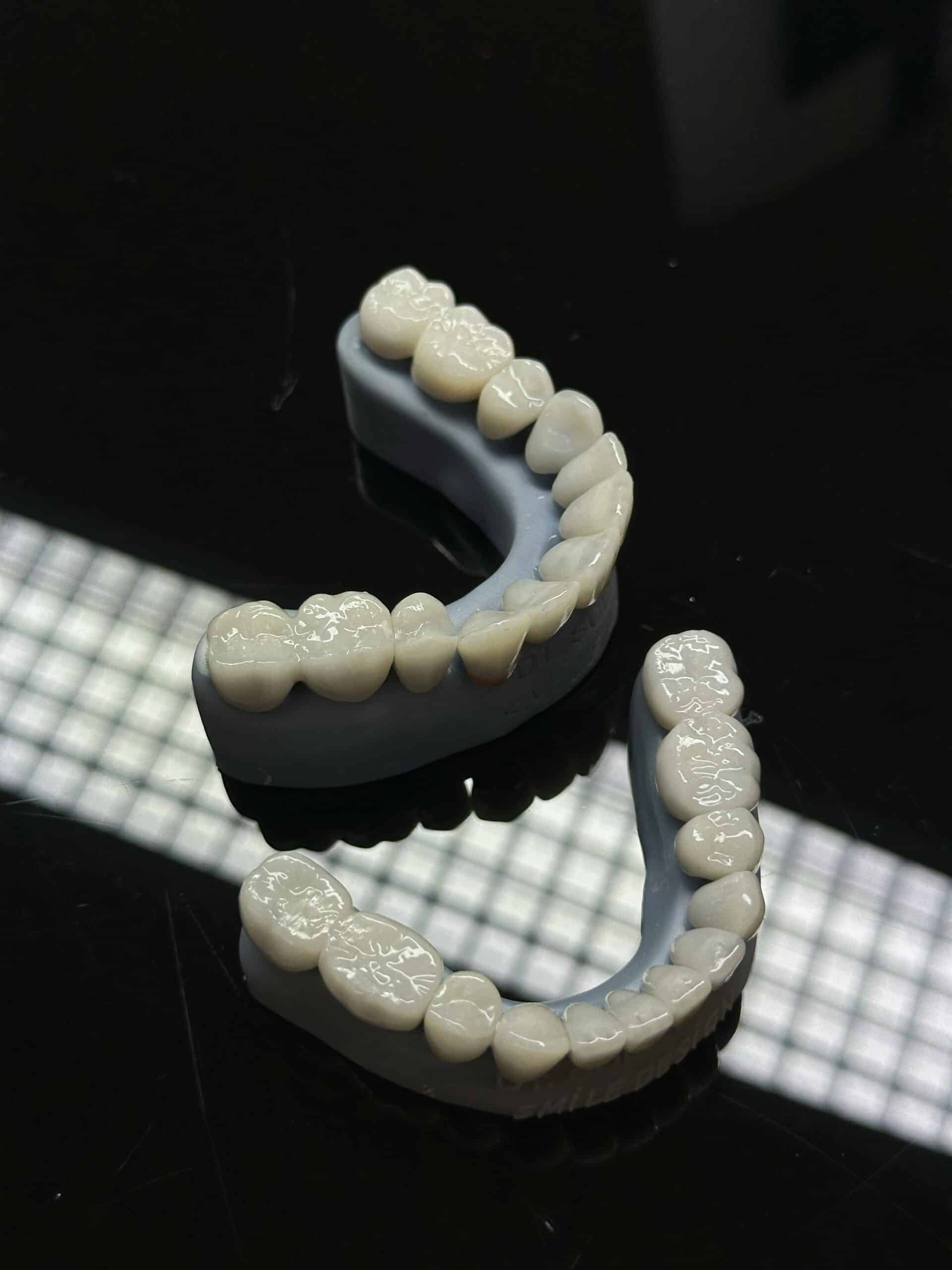
Give Your Vulnerable Tooth Extra Protection
At DentalX Downsview Dental Clinic , dental crowns—also known as caps—are used to restore the strength, function, and appearance of damaged teeth. Crowns can be made from porcelain, metal, or porcelain fused to metal. They act as a protective shell that fits securely over a tooth that is stained, cracked, weakened, or heavily filled.
Modern crowns are designed to feel natural, function like real teeth, and provide long-lasting durability. For patients who value aesthetics, our dentists often recommend advanced ceramic crowns. These modern materials offer exceptional translucency and color, allowing your crown to blend seamlessly with your surrounding teeth.
Dental bridges literally bridge the gap created by one or more missing teeth. A bridge is made up of two or more crowns for the teeth on either side of the gap.
At DentalX, we carefully tailor each crown and bridge to match your smile, ensuring comfort, strength, and a natural look you can feel confident about. If you have a damaged tooth or an old restoration that needs attention, our team is here to help you restore your smile beautifully. Contact Us Todays
FAQs
What is the best type of crown?
There isn’t one single “best” type of dental crown for everyone — the best crown depends on your specific tooth, bite, aesthetic goals, and overall oral health. Each material has its own advantages.
Common Types of Dental Crowns
Porcelain / Ceramic Crowns
These crowns are highly aesthetic and closely mimic the look of natural teeth. They are an excellent choice for front teeth or any area where appearance is a priority.
Zirconia Crowns
Zirconia crowns are extremely strong and durable while still offering a natural appearance. They are well suited for back teeth where chewing forces are higher and are also metal-free.
Porcelain-Fused-to-Metal (PFM) Crowns
These combine strength from a metal base with a porcelain outer layer. While durable, the metal edge can sometimes become visible over time as gums recede.
Gold or Metal Crowns
Metal crowns are very long-lasting and gentle on opposing teeth, but because of their colour, they are typically used only in areas that are not visible.
So, which is best?
- For natural appearance → Porcelain or ceramic
- For strength and longevity → Zirconia
- For heavy biting forces → Zirconia or metal
- For front teeth → Porcelain or ceramic
The best option is determined after a clinical examination, X-rays, and a discussion about your needs and preferences. Your dentist will recommend the crown that offers the best balance of strength, appearance, and longevity for your situation
What's the process?
Crown treatment typically takes around 10 days from start to finish. At your first appointment, the tooth is carefully prepared and shaped to allow the crown to fit securely and comfortably. Impressions are then taken and sent to our trusted dental laboratory for custom fabrication.
Our laboratory receives detailed information, including photographs, models, and precise shade matching, to create a crown that looks natural and blends seamlessly with your smile. This process involves careful design and craftsmanship to ensure strength, accuracy, and aesthetics, which is why it cannot be completed overnight.
Once the crown is ready, you will return for a second appointment, usually about 10 days after the preparation visit. During this appointment, we check the fit, bite, and colour match before permanently cementing the crown in place. The goal is a restoration that feels comfortable, functions well, and looks completely natural.
How do I look after my Bridge?
Looking after your dental bridge properly is essential to keep it comfortable, functional, and long-lasting.
How to Care for Your Dental Bridge?
- Brush twice daily using a soft-bristled toothbrush and fluoride toothpaste to keep the bridge and surrounding teeth clean.
- Clean underneath the bridge every day. Use floss threaders, super floss, or interdental brushes to remove plaque and food debris from beneath the false tooth (pontic).
- Maintain healthy gums by gently brushing along the gum line and using any recommended cleaning aids.
- Avoid chewing very hard or sticky foods, especially on the bridge, as these can place excessive stress on it.
- Attend regular dental check-ups and professional cleanings so your dentist can monitor the bridge and the supporting teeth.
With good oral hygiene and routine dental visits, a bridge can last for many years. If you notice looseness, discomfort, or difficulty cleaning around your bridge, contact us promptly so we can assess it.
If you have any questions about caring for your dental bridge, don’t hesitate to ask.