
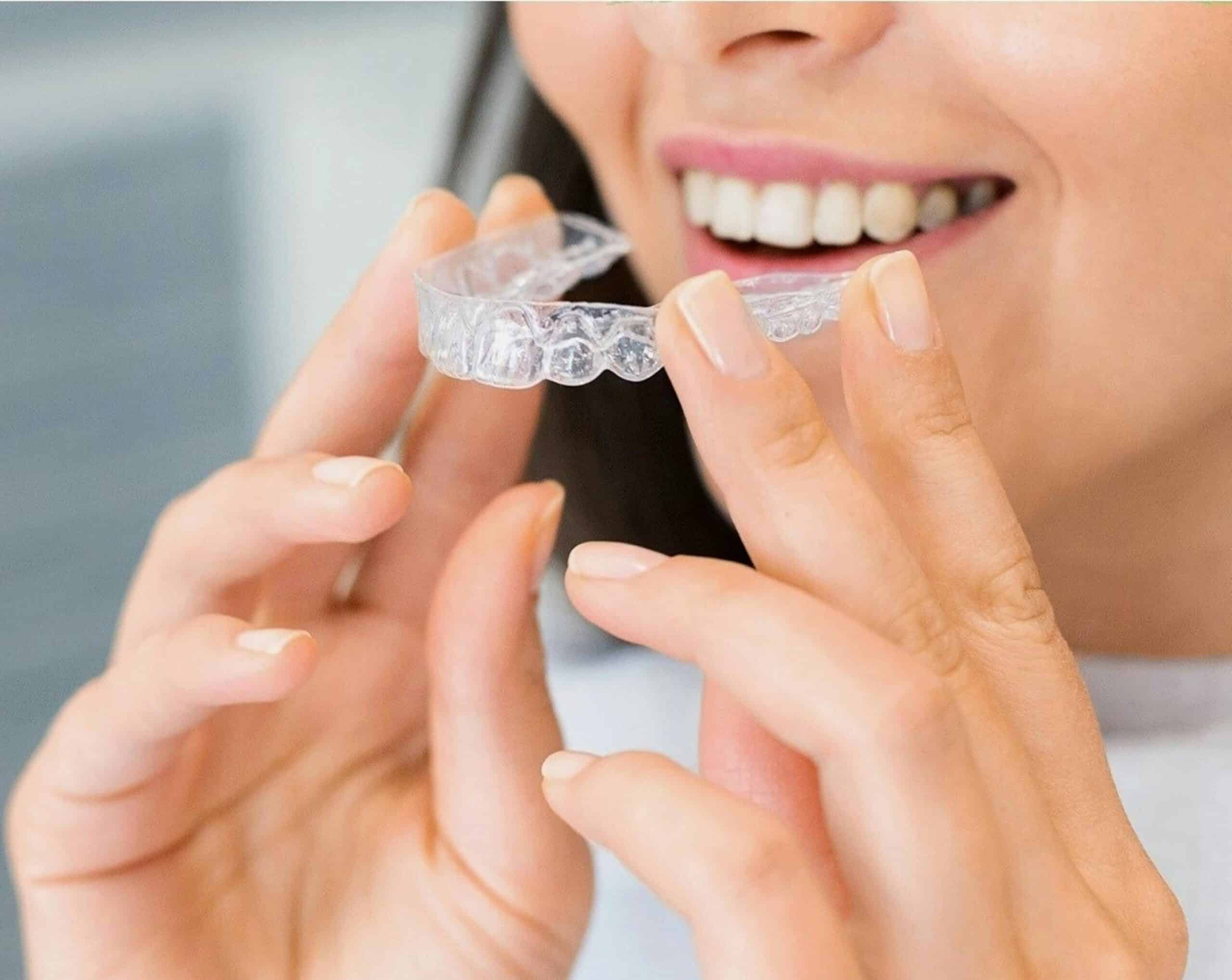
At Dental Downsview Dental Clinic , clear aligners offer a modern and discreet way to correct mild to moderate orthodontic concerns, following a thorough assessment and a personalized discussion of all available treatment options. Often referred to as “invisible braces,” clear aligners have become one of the most popular orthodontic solutions due to their comfort and nearly invisible appearance.
Clear aligners are thin, transparent, and flexible plastic trays that fit snugly over your teeth—similar to a custom-made mouthguard. A series of aligners is worn, each one gently moving your teeth step by step according to a treatment plan designed by your orthodontist.
One of the key benefits of clear aligners is that they are removable, allowing you to eat, brush, and floss with ease while maintaining excellent oral hygiene throughout treatment.
After completing aligner therapy, retainers are essential to help maintain your newly aligned smile and prevent teeth from shifting back to their original positions.
At DentalX, we are committed to helping you achieve a straighter, healthier smile with comfort and confidence. Book a consultation with our team to see if clear aligners are right for you. We are always here to help . Contact Us today.
Both conventional braces and clear aligners are effective orthodontic treatments designed to straighten teeth and improve bite alignment, but they work in different ways and suit different lifestyles and orthodontic needs.
Conventional braces use metal or ceramic brackets that are fixed to the teeth and connected by wires. These wires are adjusted over time to gradually move the teeth into the correct position. Braces are highly effective for treating complex orthodontic issues, including severe crowding, spacing, and bite problems. Because they are fixed in place, braces work continuously and do not rely on patient compliance.
Clear aligners, such as Invisalign®, are a series of custom-made, removable clear trays that gently move the teeth in stages. They are nearly invisible when worn and can be removed for eating, brushing, and flossing. Clear aligners are popular with teens and adults seeking a more discreet and convenient option and are best suited for mild to moderate alignment concerns.
Key differences include visibility, removability, and maintenance. Braces are always visible and require extra care when cleaning around brackets and wires, while clear aligners are removable and easier to maintain oral hygiene. However, aligners must be worn for the recommended number of hours each day to be effective.
The best option depends on your specific orthodontic needs, lifestyle, and treatment goals. A professional assessment is the best way to determine which solution is right for you.
Not necessarily. Having teeth removed is not always required as part of orthodontic treatment, and many patients complete treatment without any extractions.
Whether teeth need to be removed depends on several factors, including:
In many cases, modern orthodontic techniques can create space by gently widening the dental arches or carefully repositioning teeth. Tooth removal is only considered when it is the best option to achieve a healthy, stable, and long-lasting result, and only after a thorough assessment.
Before recommending any extractions, your dentist or orthodontist will review X-rays, photographs, and your overall oral health, and will discuss all options with you so you can make an informed decision.
If you have concerns about extractions or orthodontic treatment, we’re happy to talk them through with you.
Yes. Retainers are essential after orthodontic treatment is completed.
Once braces or clear aligners are removed, your teeth naturally want to move back toward their original positions. Retainers help hold your teeth in their new alignment while the surrounding bone and tissues stabilise. Without retainers, teeth can gradually shift, and the results of treatment may be lost.
There are generally two types of retainers used after orthodontic treatment:
1. Permanent retainers
These are thin metal wires or chain-style retainers that are bonded to the back of the front teeth. Because they are fixed in place, they work continuously to help keep teeth in their corrected position without relying on patient compliance.
2. Removable retainers
These retainers are similar in appearance to a clear gum shield and can be taken in and out. Most patients are advised to wear removable retainers full-time initially, then transition to night-time wear long term. The exact wearing schedule depends on your individual case and will be clearly explained at the end of your treatment.
Both types of retainers play an important role in maintaining your orthodontic results. Your dentist or orthodontist will recommend the most suitable option based on your treatment and lifestyle