An Evidence-Based Guide from a Dentist in Downsview
Wisdom teeth—clinically known as third molars—are one of the most common sources of confusion and concern in dentistry. For years, many people were told that wisdom teeth should be removed “just in case.” However, modern dental research does not support routine removal of healthy wisdom teeth.
At DentalX Downsview Dental Clinic, we believe in evidence-based dentistry. As a trusted Dentist in Downsview, our recommendations are guided by current scientific research, accredited dental organizations, and—most importantly—your individual oral health.
What Are Wisdom Teeth?
Wisdom teeth are the last permanent molars to develop, usually emerging between the ages of 17 and 25. Most people have up to four, though some may have fewer—or none at all.
Problems arise not because wisdom teeth exist, but because many jaws do not have enough space for them to erupt and function properly.
When Wisdom Teeth Can Be Safely Kept
According to major health authorities, wisdom teeth do not need to be removed if they are healthy and problem-free.
You may be able to keep your wisdom teeth if they are:
- Fully erupted into a functional position
- Free of pain, infection, and inflammation
- Easy to clean with brushing and flossing
- Not affected by decay or gum disease
- Not damaging nearby teeth or bone
Current evidence shows no proven health benefit to removing wisdom teeth that are asymptomatic and disease-free. In these cases, regular monitoring with exams and X-rays is the recommended approach.
When Wisdom Teeth Should Be Removed?
Removal is typically recommended only when wisdom teeth are causing problems or pose a clear risk to oral health.
Evidence-based reasons for extraction include:
- Pain, swelling, or repeated infections
- Partial eruption that traps bacteria (pericoronitis)
- Tooth decay that cannot be properly treated
- Gum disease affecting the wisdom tooth or adjacent molar
- Damage to neighboring teeth or jawbone
- Cysts or other pathology seen on X-rays
In these situations, removal is considered a preventive and therapeutic treatment, not a routine one.
Should Wisdom Teeth Be Removed “Just in Case”?
🔬 What the research says:
Systematic reviews and high-quality studies show insufficient evidence to support routine preventive removal of healthy, symptom-free wisdom teeth.
✔ Some clinicians may recommend early removal based on individual risk factors and clinical judgment.
✖ However, major health organizations do not recommend automatic extraction without signs of disease.
Because wisdom tooth surgery carries real risks—such as infection, dry socket, nerve injury, and prolonged recovery—unnecessary removal should be avoided.
Our Evidence-Based Approach at DentalX Downsview Dental Clinic
At DentalX Downsview Dental Clinic, we take a conservative, patient-first approach:
- We do not recommend removal unless it is clinically justified
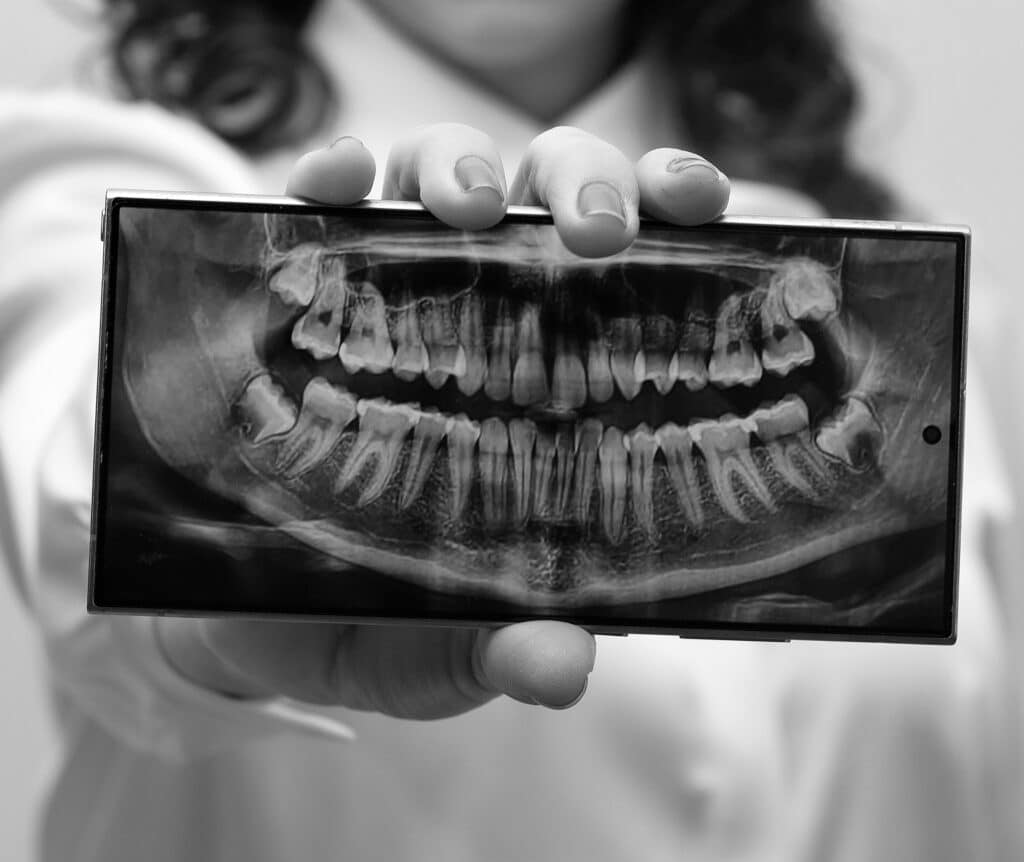
- We explain your X-rays and findings clearly
- We discuss risks, benefits, and alternatives
- We personalize decisions based on your age, anatomy, and oral health
Whether monitoring or removal is recommended, you’ll always receive honest guidance and compassionate care—and we are always here to help.
Final Answer: Keep or Remove?
There is no universal answer.
- Healthy, symptom-free wisdom teeth → monitoring is often appropriate
- Problematic or high-risk wisdom teeth → removal is usually recommended
The right decision depends on science, not habit—and on you, not a one-size-fits-all rule.
If you’re unsure about your wisdom teeth or experiencing discomfort, book a consultation with a trusted Dentist in Downsview at DentalX Downsview Dental Clinic. Early evaluation leads to better outcomes and peace of mind.
Your oral health matters—and we are always here to help. Contact Us
“Sources & References”
- InformedHealth.org (NCBI / IQWiG) – Wisdom Teeth Removal
https://www.ncbi.nlm.nih.gov/books/NBK279590/ - American Dental Association (ADA) – Wisdom Teeth
https://www.ada.org/resources/ada-library/oral-health-topics/wisdom-teeth - American Association of Oral and Maxillofacial Surgeons (AAOMS)
https://myoms.org/what-we-do/wisdom-teeth/ - Ontario Dental Association – Wisdom Teeth Removal
https://www.oda.ca/oral-health-basics/dental-procedures/common-dental-procedures/wisdom-teeth-removal/